
Introduction to Greek Meatballs
Why Greek Meatballs are a Game Changer for Your Meals
Are you tired of the same old weeknight dinners? Enter Greek meatballs! These little bundles of flavor are not only delicious but also versatile, making them a fantastic option for various meals. Ground beef and pork join forces with fragrant herbs and spices like garlic, parsley, and mint, creating a flavor explosion that’ll transport your taste buds straight to the Mediterranean.
What sets Greek meatballs apart is their ability to change up your dinner routine. Whether you serve them as part of a mezze platter with tzatziki, toss them into a fresh salad, or even wrap them in flatbreads for a hearty burrito-style meal, the options are endless. Plus, they’re freezer-friendly! You can whip up a batch, freeze them, and enjoy delicious home-cooked meals whenever you need them.
For those interested in how to integrate healthier options, Greek meatballs can easily accommodate lean meats and fresh ingredients for a nutritious boost. Not to mention, they’re a crowd-pleaser for dinner parties or casual gatherings. So, are you ready to elevate your culinary game? Let’s dive into making these tempting Greek meatballs!
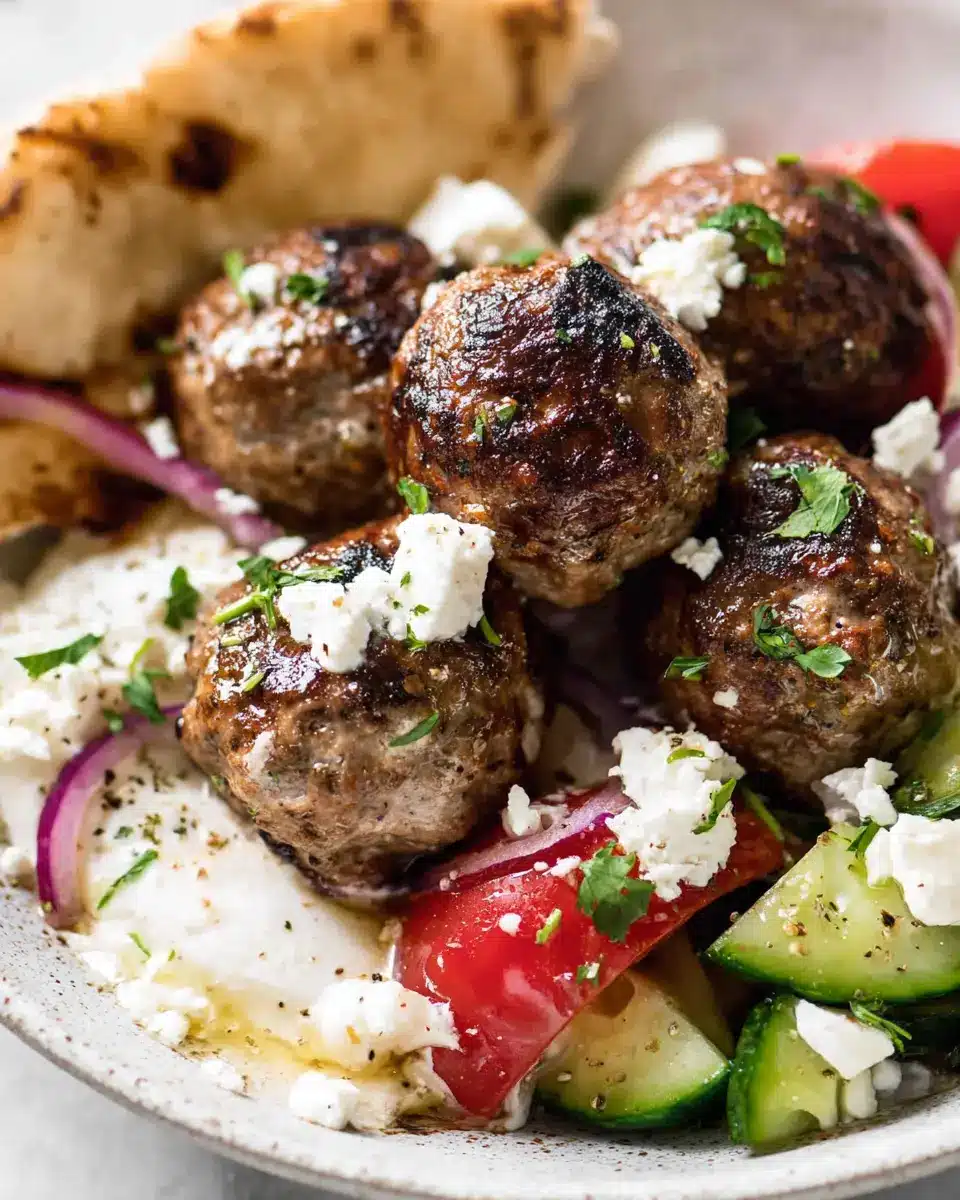
Ingredients for Greek Meatballs
Essential Ingredients for Greek Meatballs
Creating the perfect Greek meatballs starts with a handful of essential ingredients that flavor each bite beautifully. Here’s what you’ll need:
- Beef and Pork Mince: A hearty mix of beef and pork (or just beef) gives the meatballs their juicy texture.
- Aromatics: Grated red onion and minced garlic add depth and deliciousness.
- Breadcrumbs: Panko breadcrumbs provide a light, airy texture that helps keep the meatballs tender.
- Egg: Binding them together, the egg plays a crucial role in maintaining their shape.
- Fresh Herbs: Finely chopped parsley and mint—preferably spearmint—bring that authentic Greek flair.
- Spices: A sprinkle of dried oregano, salt, and black pepper rounds out the flavor profile beautifully.
For the full recipe, check out My Greek Dish for some great tips!
Optional Ingredients to Elevate Your Dish
Want to take your Greek meatballs to the next level? Here are some optional ingredients that can really make a difference:
- Cheese: Adding a touch of feta cheese to the meat mixture can add a delightful creaminess.
- Citrus Zest: Grated lemon or orange zest can brighten up the flavors.
- Baking Options: If you're health-conscious, baking these meatballs instead of frying can reduce calories while keeping them moist.
- Serving Suggestions: Pair with homemade tzatziki or a refreshing Greek salad for a full meal experience. This article from Food Network offers excellent tips on tzatziki preparation.
Embrace the flavors of Greece, and watch how these simple ingredients transform into a flavorful dish!
Preparing Greek Meatballs
Cooking up a batch of Greek meatballs is not just about feeding your belly; it's about crafting flavors that transport you straight to the Mediterranean. Let’s walk through the process step-by-step so you can savor every moment.
Gather and prep your ingredients
Before we dive into cooking, it’s crucial to gather your ingredients. This not only simplifies your cooking process but also keeps things organized. Here’s what you'll need:
- 1 red onion (grated)
- 500g (1 lb) beef mince (ground beef) or lamb
- 200g (6.5 oz) pork mince (ground pork), or more beef
- 2 garlic cloves (minced)
- 1 cup panko breadcrumbs
- 1 egg
- ¼ cup fresh parsley (finely chopped)
- 6 large mint leaves (finely chopped)
- ½ teaspoon dried oregano
- 1 tablespoon extra virgin olive oil
- Salt and black pepper
Don’t forget, a bit of zest in the form of lemon juice or a side of tzatziki can elevate your meatballs to a whole new level!
Mix the meat and spices
Now that you’ve got everything handy, it’s time to mix! In a large bowl, combine the grated onion with the beef and pork mince, garlic, breadcrumbs, egg, parsley, mint, oregano, olive oil, salt, and pepper. Using your hands is the best method here! This way, you'll be able to ensure all ingredients are well incorporated. Give it a good mix for a few minutes until you have a smooth, consistent mixture. That’s where the magic happens!
Shape the meatballs with care
Once your mixture is ready, it’s shaping time! Use a heaped tablespoon to measure out portions and roll them into balls in your hands. Aim for uniform sizes to ensure even cooking. This recipe should yield around 32-35 meatballs. If you have a little time, consider refrigerating them for about an hour. This helps them retain their shape while cooking—trust me, it’s worth it!
Cook the meatballs to perfection
Now for the exciting part—cooking! In a large skillet, heat olive oil over medium-high heat. For a true Mediterranean flavor, use just enough oil to cover the skillet’s surface. Dredge each meatball lightly in flour, shaking off excess before adding them to the skillet. Cook them in batches for about 5–6 minutes, turning them until they are golden brown on all sides. You’ll be greeted with heavenly aromas that will make your kitchen feel like a Greek tavern!
Optionally bake for a healthier twist
If you’re looking for a leaner option, you can bake your Greek meatballs instead. Just preheat your oven to 180°C (350°F), spray the baking tray with olive oil, and bake for about 20 minutes or until they are beautifully browned. Baking gives them a lovely texture while cutting down on the oil used.
Serve your Greek meatballs warm, perhaps with a side of tzatziki and some fresh pita. They’re perfect for sharing or enjoying on a cozy night in!
For more tips on Mediterranean cooking, consider exploring Mediterranean Living for additional recipes and insights. Happy cooking!
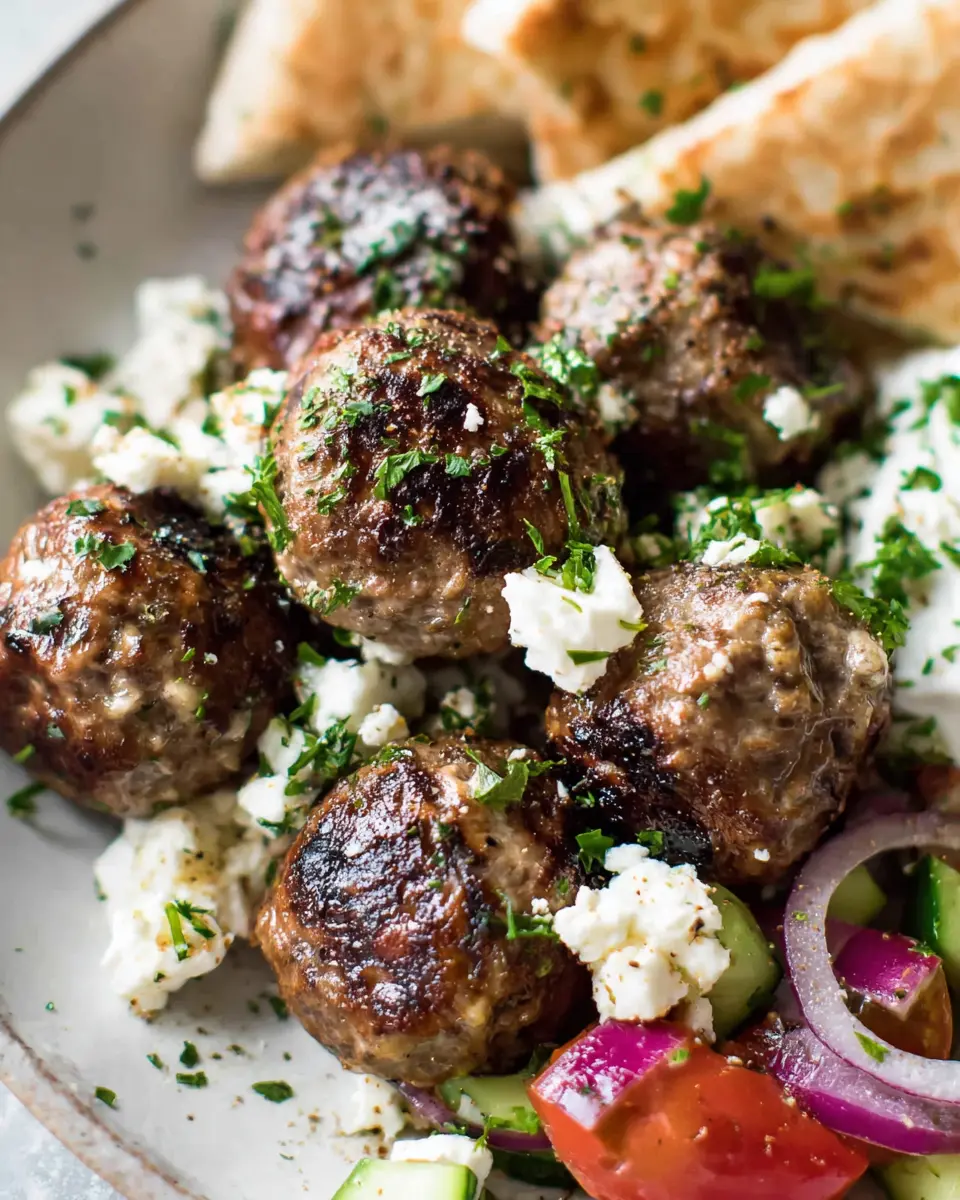
Variations on Greek Meatballs
Herb-infused Greek Meatballs
Elevate your Greek meatballs by incorporating a medley of fresh herbs! Try adding dill or cilantro along with the traditional parsley and mint. This not only enhances the flavor but also brings vibrant color to your dish. If you’re a fan of a little heat, consider mixing in some crushed red pepper flakes for a delightful twist.
Quinoa-stuffed Greek Meatballs
For a wholesome twist, why not create quinoa-stuffed Greek meatballs? Simply substitute a portion of the meat with cooked quinoa. This adds texture and boosts the nutritional profile with added fiber and protein. Just mix your quinoa into the meatball mixture, and watch them become a flavorful, filling option that’s perfect for serving with a side salad or tzatziki.
If you’re looking for more inspiration in transforming your Greek meatballs, check out these delicious variations from My Greek Dish.
Cooking Notes for Greek Meatballs
Tips for Achieving the Perfect Texture
To achieve that perfectly juicy texture in your Greek Meatballs, it’s all about the mixing technique. Use your hands to blend the ingredients, but avoid overmixing—this can lead to dense meatballs. If you can, let the mixture chill for an hour; this will help them hold their shape while cooking. For an ultra-tender bite, opt for panko breadcrumbs over regular breadcrumbs as they soak up moisture beautifully.
How to Adjust for Dietary Preferences
Want to make these meatballs more accommodating? You can easily substitute beef or lamb with ground turkey or chicken for leaner options. For a gluten-free version, replace regular breadcrumbs with ground oats or certified gluten-free breadcrumbs. If you're looking to reduce the fat content, opt for lean cuts of meat and cut back on the olive oil in the mixture. With these adjustments, you can enjoy Greek Meatballs tailored to your dietary needs!
For more ideas, check out this vegetarian option or explore the health benefits of lean meat.
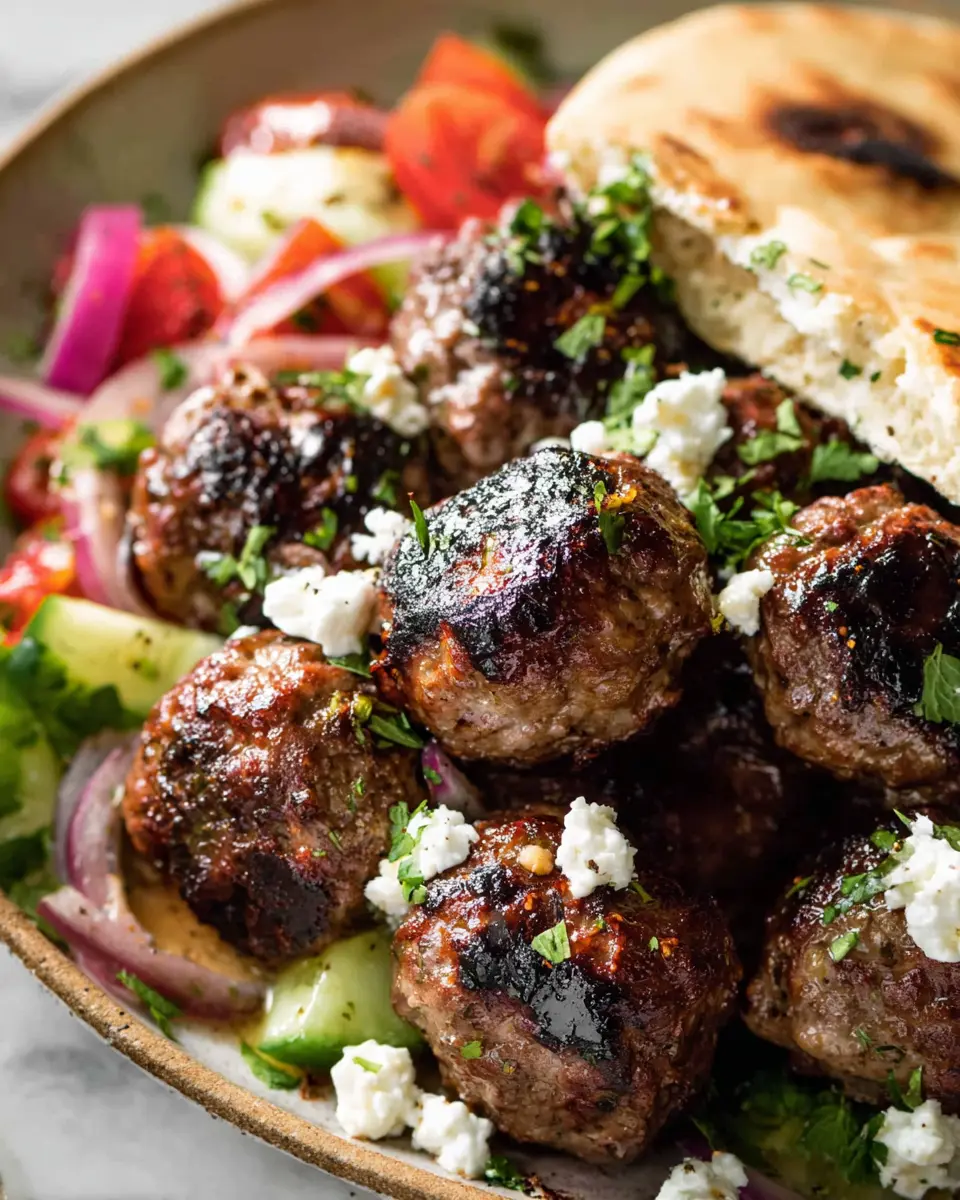
Serving suggestions for Greek Meatballs
Mezze platter ideas
Elevate your dining experience by serving your Greek Meatballs as part of a vibrant mezze platter. Pair them with warm pita bread, refreshing tzatziki, and an assortment of olives. Add hummus and roasted red peppers to create a colorful spread that’s perfect for sharing with friends or family. Don't forget a sprinkle of feta cheese and a drizzle of olive oil for that authentic flavor!
Meal prep solutions for busy professionals
For busy professionals, Greek Meatballs are a fantastic meal prep option. Cook a batch over the weekend, then store them in airtight containers. Pair with prepped salads or grain bowls of quinoa or brown rice to have quick, delicious lunches ready to go. They also freeze beautifully! Simply defrost and reheat for a satisfying dinner after a long day at work.
For further meal inspiration, check out BBC Good Food for more ideas on meals on the go!
Time Details for Greek Meatballs
Preparation Time
Get ready for a culinary delight! The preparation for your Greek Meatballs takes about 15 minutes. That’s just enough time to set a cozy atmosphere and gather your ingredients.
Cooking Time
Once you're prepped, the actual cooking will take around 25 minutes. This includes pan-frying your meatballs to perfection or baking them for a healthier twist!
Total Time
In total, from start to finish, you’re looking at about 40 minutes before you can indulge in these savory bites. Perfect for a quick weeknight dinner or a gathering with friends! Enjoy them alongside a fresh Greek salad or flavorful tzatziki for the ultimate culinary experience.
For more details and tips, check out My Greek Dish for authentic Greek recipes!
Nutritional Information for Greek Meatballs
Calories per serving
Each serving of these delightful Greek Meatballs contains approximately 513 calories. If you’re mindful of your calorie intake, opting for lean beef and cutting back on oil can help reduce this number further.
Protein content
These meatballs are a fantastic source of protein, offering about 30 grams per serving! This makes them a delicious and filling option, perfect for maintaining energy levels throughout your busy day.
Sodium levels
In terms of sodium, each serving has roughly 780 mg. To keep it within a healthy range, feel free to reduce the added salt or use low-sodium alternatives. Striking a balance between flavor and health is key!
For more tips on nutritious meal options, check out Healthline’s guide on protein-rich foods.
FAQs about Greek Meatballs
How can I make my Greek meatballs juicier?
To achieve juicy Greek meatballs, consider adding moisture-rich ingredients. Including a bit more fresh parsley and finely chopped mint can help enhance the flavor and moisture. Also, using panko breadcrumbs rather than regular breadcrumbs contributes to a softer texture. For extra juiciness, you can add a splash of milk or even a tablespoon of grated Parmesan cheese to the mixture. Just be careful not to overmix, as this can lead to a denser meatball.
What’s the best way to store leftovers?
If you find yourself with leftover Greek meatballs, store them in an airtight container in the fridge for up to three days. For longer storage, consider freezing them! Place them in a single layer on a baking sheet until they’re firm, then transfer them to a freezer-safe bag. They can last up to three months in the freezer, making them perfect for quick meals later on. Just reheat them in the oven or on the stovetop for a delightful comeback!
Can I use different types of meat for Greek meatballs?
Absolutely! While traditional recipes often use a mix of beef and pork, you can easily substitute with ground turkey, chicken, or even lamb for a unique twist. Each type of meat brings its own flavor profile, so feel free to experiment and find your favorite combination. Just keep in mind that cooking times may vary depending on the meat utilized. If you’re keen to explore different variations, check out this helpful guide on meat substitutions.
Conclusion on Greek Meatballs
A delicious new way to enjoy homemade meals
Greek Meatballs offer a delightful twist on homemade meals, bursting with flavor and authenticity. Whether you serve them as part of a mezze platter or embed them in a delicious burrito, they’re a crowd-pleaser. Explore this recipe and elevate your dinner game tonight! For more inspirations, check out My Greek Dish and enjoy your cooking journey!

Greek Meatballs
Equipment
- Large Bowl
- skillet
- measuring cups
- measuring spoons
Ingredients
Meatballs
- 1 red onion grated
- 500 g beef mince (ground beef) or lamb
- 200 g pork mince (ground pork) or more beef
- 2 cloves garlic minced
- 1 cup panko breadcrumbs or use normal
- 1 egg
- ¼ cup fresh parsley finely chopped
- 6 large mint leaves finely chopped (spearmint if possible)
- ½ teaspoon dried oregano
- 1 tablespoon extra virgin olive oil
- ¾ teaspoon salt
- Black pepper to taste
Cooking / Serving
- ½ cup flour any white
- 3 tablespoon olive oil
- Finely chopped parsley optional, for garnish
- Tzatziki or Greek yoghurt
Instructions
Meatball Preparation
- Grate the onion straight into a large bowl, then add remaining Meatball ingredients. Use your hands to mix well for a few minutes until the mixture is quite smooth and very well combined.
- Optional: Refrigerate for 1 hour – makes them easier to roll + retains round shape when cooking.
- Measure out heaped tablespoons and dollop onto a work surface – should make around 32 – 35. Then roll into balls.
Cooking Method
- Heat most of the oil in a large skillet over medium high heat (medium if you have a strong gas stove). Use enough oil to cover the surface of the skillet.
- Cook in 2 to 3 batches: Dredge meatballs lightly in flour, shaking off excess, then place in the skillet. Roll them around and cook for 5 – 6 minutes, until nicely browned all over. Remove onto plate, cover to keep warm and repeat with remaining meatballs.
- BAKING: Alternatively, spray generously with oil (preferably olive oil) then bake at 180C/350F for 20 minutes or until browned. The pan frying method is the traditional way and the meatballs are slightly juicier.
- Serve as a starter as part of a mezze platter with pita bread and tzatziki, or make dinner plates by adding a salad like a Greek Salad!



Leave a Reply