
Introduction to Spanish Paella
What is paella and why is it beloved?
Spanish Paella is more than just a dish; it's a culinary tradition that captures the heart of Spain. Originating from the coastal region of Valencia, this vibrant one-pan meal combines rice with a diverse assortment of proteins, vegetables, and aromatic spices. Paella is characterized by its golden hue, often enhanced by the luxurious touch of saffron, which has been celebrated for centuries not just for its flavor, but also for its health benefits.
What makes paella truly beloved is its versatility. You can create countless variations—whether you prefer seafood, chicken, or a mix of both, there's a paella for you. The communal aspect of sharing a pan of paella among friends and family brings people together, making it a centerpiece for gatherings.
Many might wonder how such a humble dish became a staple of Spanish cuisine. It showcases local ingredients and reflects the region's rich agricultural heritage. If you're curious about cooking this delicious meal, you're in for a treat! Let's dive into the recipe and discover how to create your own Spanish Paella masterpiece.
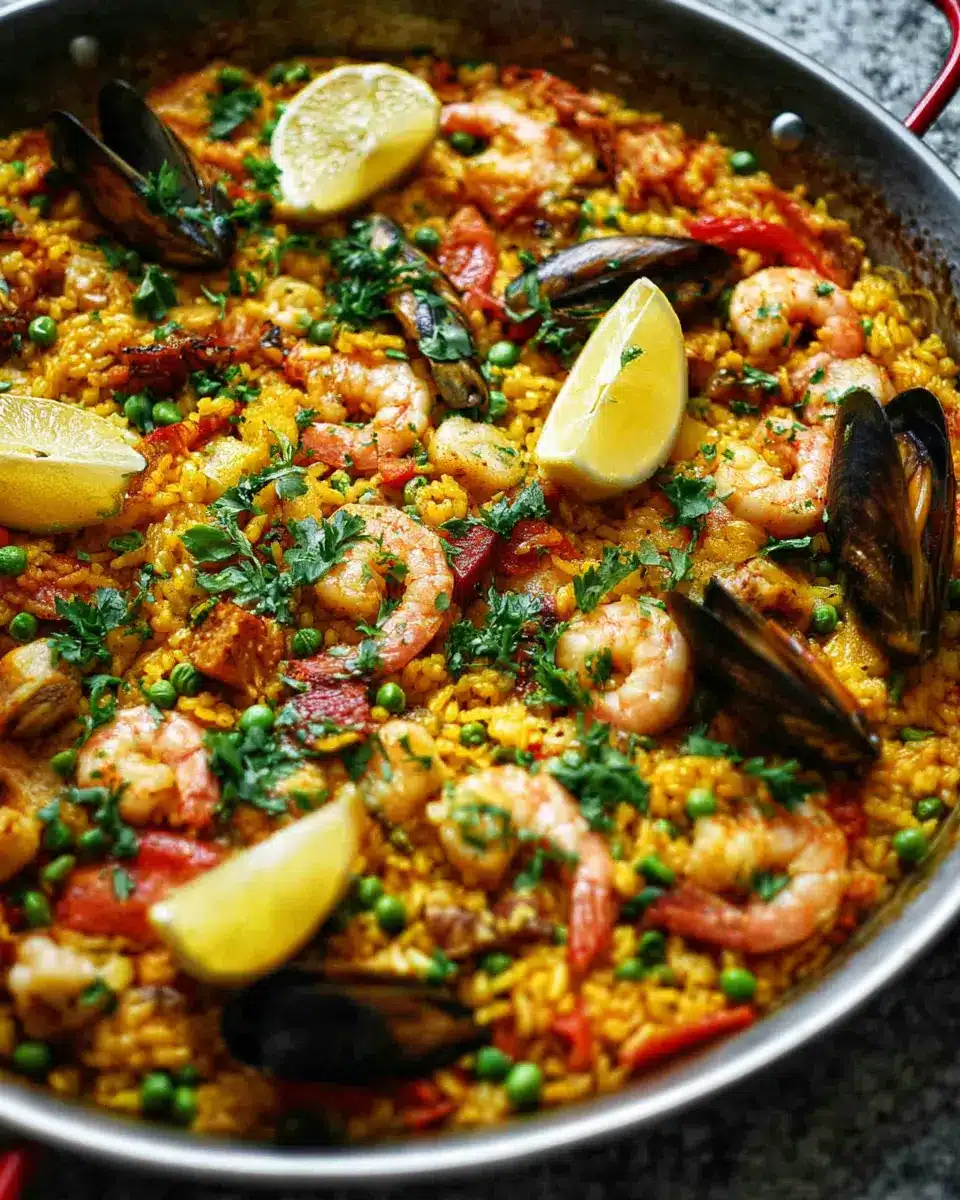
Ingredients for Spanish Paella
Essential ingredients for a classic Spanish paella
Creating an authentic Spanish paella starts with a solid foundation of ingredients. Here’s what you’ll typically need:
- Extra virgin olive oil: Use high-quality Spanish EVOO for the best flavor.
- Proteins: Chicken thighs are popular; you might also consider shrimp, mussels, and calamari for that quintessential seafood medley.
- Spanish rice: Opt for bomba or calaspara rice to achieve that perfect texture.
- Broth: Chicken broth is a convenient choice—don’t forget to infuse it with saffron for that signature color and taste.
- Vegetables: Diced onions, bell peppers, and ripe tomatoes are excellent choices to build your flavor base.
For a complete list and to shop ingredients online, check out options on Amazon.
Customizable options for your paella dish
The beauty of Spanish paella lies in its versatility! While the classic version is fantastic, feel free to make it your own:
- Meat substitutions: Switch up the proteins—consider adding turkey or beef that can pair wonderfully with your curry.
- Vegetable additions: Get creative with seasonal vegetables like artichokes or asparagus to cater to your palate.
- Seafood preferences: Don’t like seafood? Omit it and add extra veggies or try chorizo for a savory twist.
Whether you keep it traditional or mix things up, your paella will carry a flavor profile that’s uniquely yours!
Step-by-Step Preparation of Spanish Paella
Making Spanish Paella is not just about cooking; it’s about bringing people together over a meal that represents the heart of Spanish cuisine. With this step-by-step guide, let’s dive into the vibrant world of flavors that paella provides.
Prepare the ingredients
Start by gathering all your ingredients and laying them out. You'll need:
- ¼ cup extra virgin olive oil
- 1 diced onion
- 1 diced bell pepper (mix of red and green for color)
- 4 minced cloves of garlic
- 3 finely diced roma tomatoes (or 8 oz. tomato sauce)
- 1 bay leaf
- 1 teaspoon of sweet or smoked paprika
- A pinch of saffron threads
- Salt and pepper to taste
- 4 boneless, skinless chicken thighs, cut into pieces
- 2 cups of Spanish Rice
- 5 cups of chicken broth
- ½ lb of jumbo shrimp, ½ lb of mussels, and 8 oz of calamari rings
- Frozen peas and lemon slices for garnish
This preparation ensures you're not scrambling to find something mid-cooking.
Sauté the vegetables
In a large skillet or paella pan, heat the olive oil over medium heat. Sauté the diced onion, bell pepper, and minced garlic until the onion becomes translucent, which should take about 4-5 minutes. Then, stir in the roma tomatoes, bay leaf, paprika, saffron, salt, and pepper. Let this mixture simmer for another 5 minutes, allowing the flavors to meld beautifully.
Add the proteins and spices
Next, toss in the chicken thighs and 2 tablespoons of fresh chopped parsley. Cook this mixture for about 5-7 minutes, ensuring that the chicken is browned on all sides. This step not only enhances the dish's flavor but also establishes a delicious base.
Incorporate the rice
Add the Spanish rice to the skillet, stirring it for about a minute to coat the rice with the flavorful mix. Then, carefully pour the chicken broth around the pan without stirring the rice any further. This method is crucial for achieving that coveted socarrat, the crispy crust at the bottom of the paella.
Cook and combine the flavors
Bring the mixture to a boil, then reduce the heat to medium-low. Let it cook uncovered for about 15-18 minutes. During this time, resist the urge to stir! Give the pan a gentle shake instead, promoting even cooking and helping form that delicious socarrat.
Add seafood and final touches
Once most of the liquid is absorbed, nestle the jumbo shrimp, mussels, and calamari rings into the mixture. Sprinkle the frozen peas on top and cook for an additional 5 minutes. Keep an eye on it; if the rice isn't completely cooked, feel free to add a splash more broth.
Serve and enjoy the paella
Remove the pan from heat and cover it with lid or foil. Let it rest for 10 minutes to allow flavors to deepen. Before serving, garnish with fresh parsley and lemon slices. Once plated, gather your friends and enjoy this beautifully aromatic Spanish Paella that encapsulates the essence of Spain!
If you’re looking for an authentic experience, don’t forget to serve your paella with a side of enjoyment and good conversation!
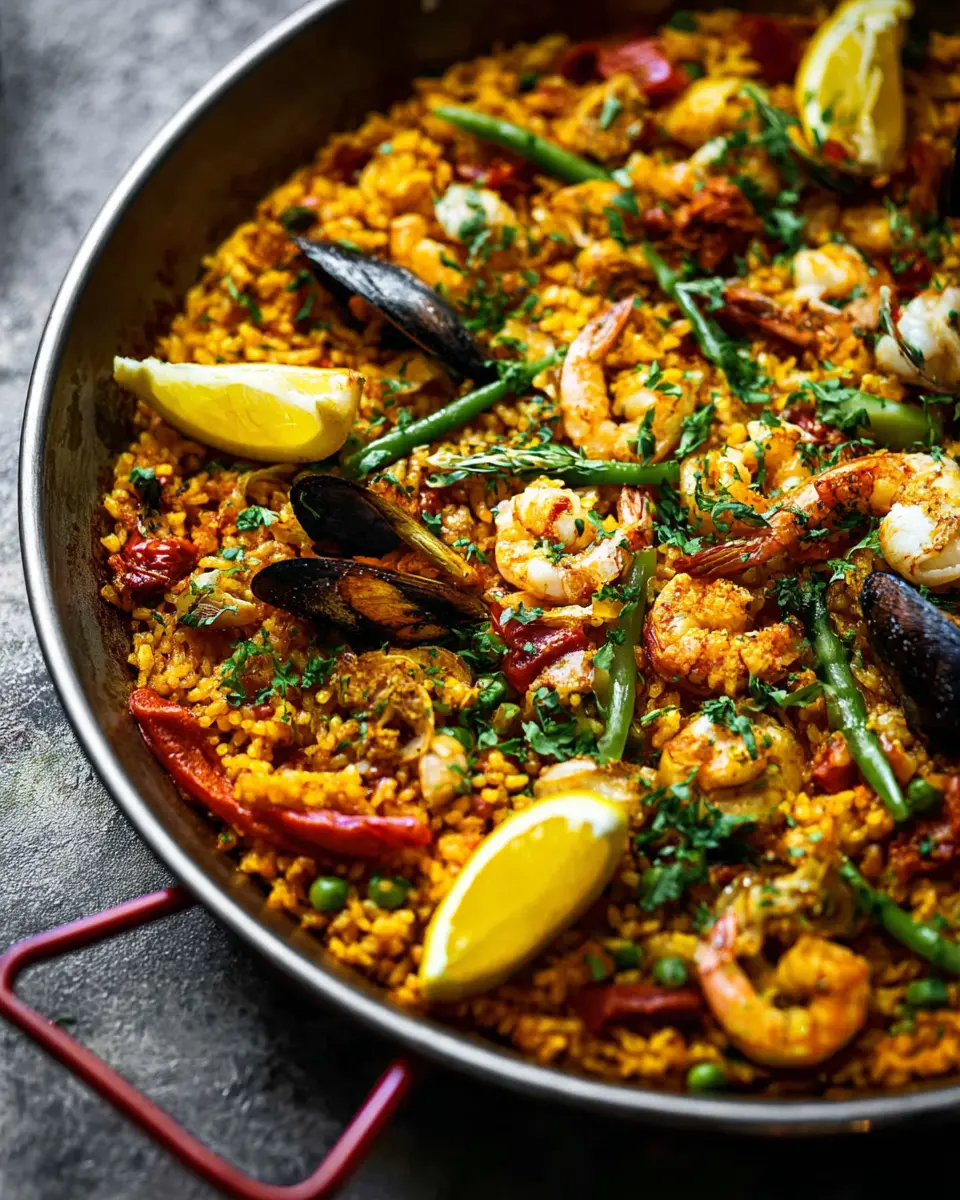
Variations on Spanish Paella
Vegetarian Paella Alternatives
If you’re looking to enjoy a delicious Spanish Paella without meat or seafood, you’re in for a treat. A vegetarian paella can be just as vibrant and satisfying! Simply replace the chicken and seafood with a medley of your favorite vegetables. Think artichokes, green beans, mushrooms, olives, and asparagus. You can sauté these alongside the onions and bell peppers at the beginning to enhance their flavors.
Different Protein Options in Paella
For everyone who loves customizing their Spanish Paella, you have plenty of protein options at your disposal! Besides the classic chicken, you can switch it up with beef, turkey, or even rabbit if you’re feeling adventurous. If seafood is your preference, consider using shrimp, clams, scallops, or even a combination for a rich, varied taste. The beauty of paella lies in its adaptability, allowing you to create a dish that suits your palate every time!
Whether you're a meat lover or a veggie enthusiast, Spanish Paella can cater to everyone!
Cooking Tips and Notes for Spanish Paella
Secrets to Achieving the Perfect Socarrat
One of the hallmarks of a great Spanish paella is the socarrat, a crispy layer of rice at the bottom. To achieve this, avoid stirring the rice after adding the broth and keep an eye on the cooking process. If it looks like it's drying too quickly, you can add a touch of broth, but remember, minimal intervention is key. Once done, let it sit covered for about 10 minutes to allow those flavors to meld.
Ingredient Substitutions for Convenience
If you’re missing any ingredients, don’t fret! You can swap chicken for beef or even leave out seafood for a veggie-only option. Instead of Spanish rice, medium grains like Calrose work well. For broth, vegetable or homemade chicken broth can offer a delicious flavor. Lastly, ever thought of adding olives or green beans? Feel free to incorporate your favorites!
By following these tips, your paella will not only be authentic but also uniquely yours! Happy cooking!
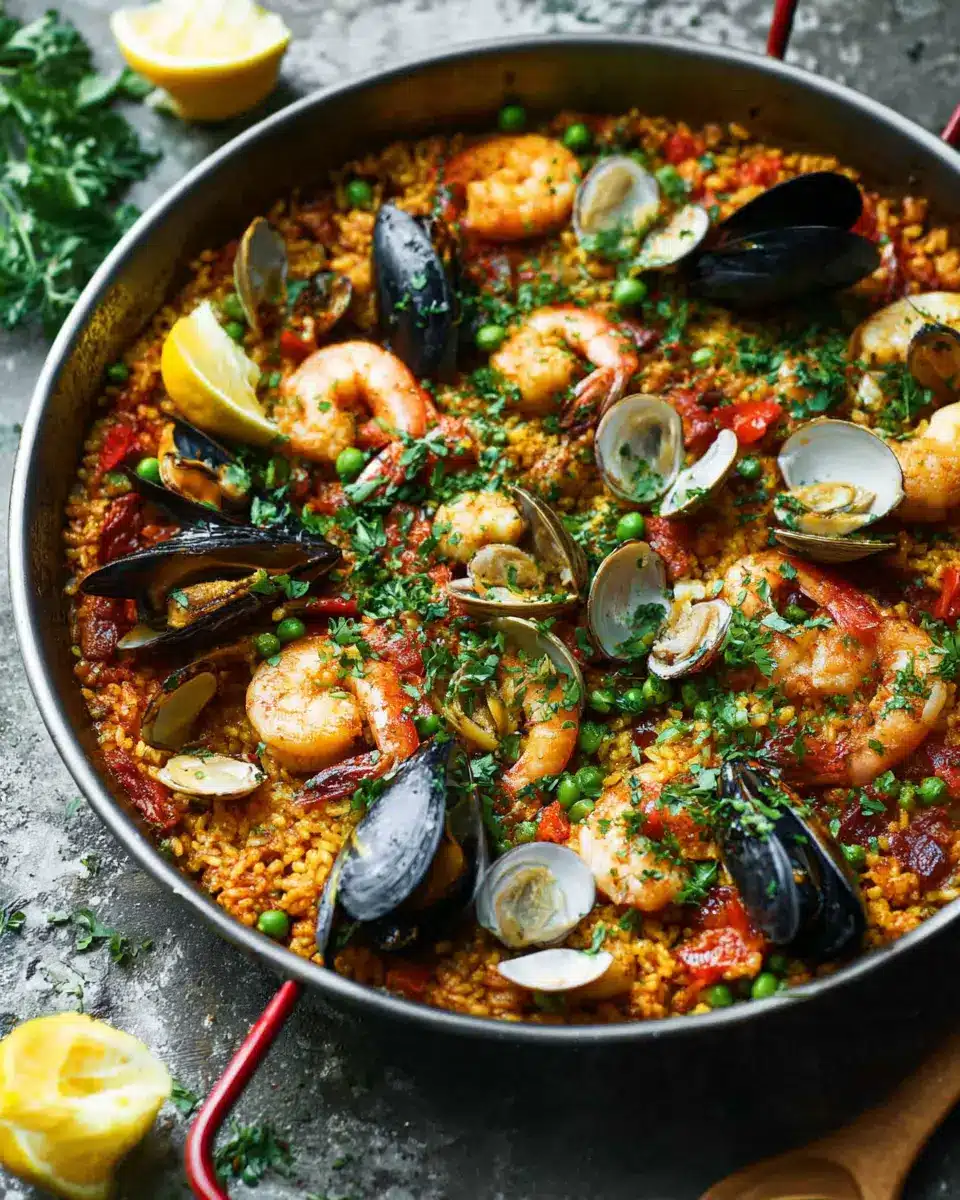
Serving Suggestions for Spanish Paella
Ideal sides to complement your paella
To truly bring your Spanish Paella experience to life, consider pairing it with refreshing sides. A simple arugula salad drizzled with lemon vinaigrette provides a zesty contrast. For those craving something heartier, crusty bread or garlic bread pairs beautifully, perfect for soaking up any leftover sauce.
You might also enjoy a platter of marinated olives or roasted vegetables—both can brighten up your meal and introduce a lovely medley of flavors.
Beverage pairings to enhance the experience
When it comes to beverages, non-alcoholic options can shine alongside your Spanish Paella. Sparkling water with a splash of citrus, like lemon or lime, balances the rich flavors perfectly. Herbal iced teas, such as mint or hibiscus, can also provide a refreshing contrast.
If you're looking for something warm, a light citrusy herbal tea can be an excellent way to cleanse the palate between bites. These pairings not only enhance your dining experience but also celebrate the vibrant essence of Spanish cuisine!
Time Breakdown for Spanish Paella
Preparation time
Getting ready for your Spanish Paella will take about 15 minutes. This includes chopping your veggies, prepping your ingredients, and gathering everything in one place. It’s a chance to embrace your inner chef!
Cooking time
The cooking magic happens over 30-35 minutes. You’ll slowly build flavors, letting the dish simmer to perfection while creating that coveted crispy layer at the bottom.
Total time
In total, you’re looking at around 50 minutes from start to finish. Just enough time to enjoy the process and anticipate a delicious meal! Don’t forget, a good paella is worth the wait.
For more tips on the perfect Spanish Paella, check out Paella’s rich history or how to choose the best seafood for your dish!
Nutritional Facts for Spanish Paella
Calories and Key Nutritional Components
A serving of Spanish Paella boasts approximately 535 calories, featuring 59g of carbohydrates, 37g of protein, and 15g of fat. It’s a well-rounded dish, offering essential nutrients including Vitamin A, C, and iron, making it a satisfying option for dinner.
Health Benefits of the Ingredients
The ingredients in Spanish Paella provide numerous health benefits:
- Olive Oil: Rich in antioxidants, olive oil supports heart health.
- Seafood: Shrimp and mussels are excellent sources of lean protein and omega-3 fatty acids, instrumental in brain function.
- Vegetables: Packed with vitamins and minerals, components like tomatoes and bell peppers contribute to overall well-being.
- Rice: A energy-rich carbohydrate, ideal for sustained energy.
For a more detailed view of these benefits, check out sources like the Mayo Clinic and the Harvard T.H. Chan School of Public Health.
FAQs about Spanish Paella
Can I make paella without a special pan?
Absolutely! While a traditional paella pan is great for even cooking and achieving that famous crispy bottom layer called socarrat, you can use a large skillet or a wide, shallow pot. The key is to ensure there’s enough surface area for even rice distribution. Just remember not to stir after adding the broth.
What are common mistakes when making paella?
One common mistake is stirring the rice once the broth is added. This can prevent that delicious socarrat from forming. Additionally, be cautious with the amount of liquid; using too much can lead to soggy rice. Lastly, don’t overcrowd the pan with too much seafood or meat.
How do I store and reheat leftover paella?
Store leftover Spanish paella in an airtight container in the fridge for up to 3 days. To reheat, add a splash of broth or water to prevent drying out, cover, and warm on low heat on the stove until heated through. Enjoy those flavors again!
Conclusion on Spanish Paella
The joy of homemade paella
Creating your own Spanish Paella is a delightful culinary adventure filled with flavor and tradition. Sharing this dish with family and friends can transform any gathering into a memorable celebration. So, roll up your sleeves, gather fresh ingredients, and enjoy the process of crafting this vibrant, comforting meal!
Spanish Paella
Equipment
- skillet
Ingredients
Sauce and Base
- ¼ cup Extra virgin olive oil (Spanish EVOO if you have it)
- 1 medium Onion , diced
- 1 medium bell pepper , diced (½ red and ½ green)
- 4 cloves Garlic
- 3 medium roma tomatoes , very finely diced (or 8 oz. tomato sauce)
- 1 leaf Bay leaf
- 1 teaspoon paprika , sweet or smoked
- 1 pinch saffron threads
- Salt and pepper
- ¼ cup white wine
- 2 cup Spanish rice *
- 5 cup Chicken broth *
- ½ cup frozen peas
- ½ lb Jumbo shrimp or prawns , about 12 – peeled, tail on
- ½ lb Mussels , cleaned properly (beards off)
- 8 oz calamari rings
- Lemons , for garnish
Instructions
Cooking Steps
- Add olive oil to a skillet over medium heat. Add the onion, bell peppers, and garlic and cook until the onion is translucent.
- Add chopped tomato, bay leaf, paprika, saffron, salt, and pepper. Stir and cook for 5 minutes.
- Add white wine and cook for 10 minutes. Taste and add salt if needed.
- Add chicken pieces, 2 tablespoons chopped parsley, and rice to the pot. Cook for 1 minute.
- Pour the broth slowly all around the pan and jiggle the pan to get the rice into an even layer. (Do not stir the mixture going forward!).
- Bring the mixture to a boil. Reduce heat to medium-low. Give the pan a gentle shake back and forth just once or twice during cooking.
- Cook for about 15-18 minutes (uncovered), then nestle the shrimp, mussels, and calamari into the mixture, sprinkle peas on top, and continue to cook (without stirring) for about 5 more minutes.
- Remove the pan from heat and cover it with a lid or tinfoil. Place a kitchen towel over the lid and allow to rest for 10 minutes.
- Garnish with fresh parsley and lemon slices. Serve.
Leave a Reply