
Introduction to Gyudon Japanese Beef Rice Bowls
When it comes to comfort food, few dishes can compete with the warmth and heartiness of gyudon, or Japanese beef rice bowls. Picture this: tender, marinated slices of beef simmered in a subtly sweet sauce, served atop a steaming bed of fluffy rice. It’s like a cozy hug in a bowl! Native to Japan, gyudon is not only cherished for its rich flavors but also its simplicity, making it a go-to meal for busy young professionals.
Why Gyudon is the Ultimate Comfort Food
Gyudon perfectly balances flavors and textures, giving you that satisfying bite without overwhelming your palate. The beautifully caramelized onions combined with the tender beef create a mouthwatering experience, while the umami-rich dashi stock enhances the dish’s overall depth. No wonder it’s a staple in many Japanese households!
You can whip up this delightful dish in about 30 minutes, making it a fantastic option for busy weeknights or a comforting weekend treat. Whether you're a seasoned cook or new to the kitchen, making gyudon is a straightforward and rewarding experience that results in a delicious meal you can savor and share. Plus, you can learn more about essential Japanese ingredients like mirin and soy sauce for a deeper culinary appreciation in this guide.
Dive into our complete recipe for gyudon and enjoy a bowl of happiness today!
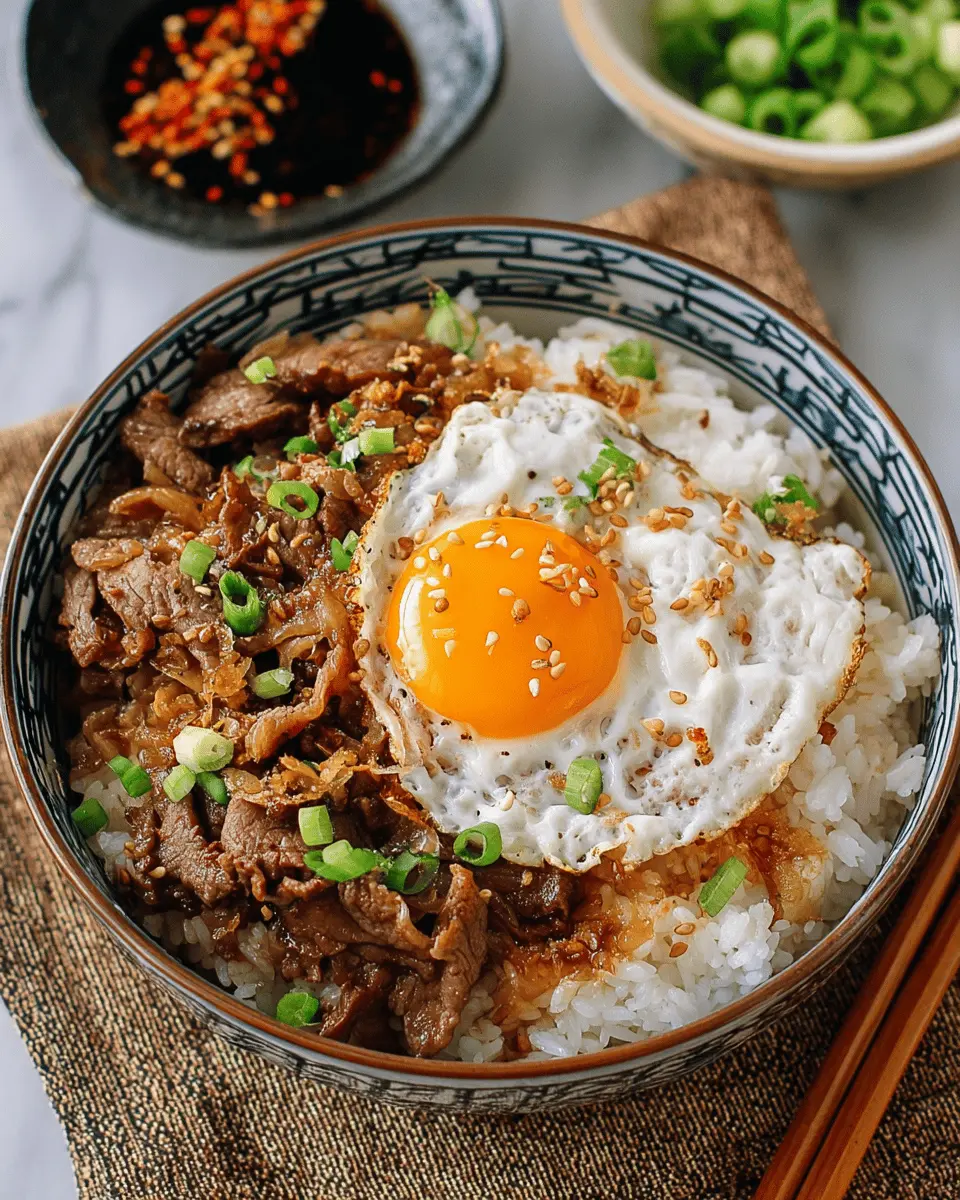
Ingredients for Gyudon Japanese Beef Rice Bowls
Essential ingredients for a perfect gyudon
To whip up authentic gyudon Japanese beef rice bowls, you'll need a handful of key ingredients that create the rich and comforting flavors this dish is known for. Here’s what you’ll need:
- Neutral oil (such as vegetable or canola oil)
- 2 medium onions, very thinly sliced
- 1 pound very thinly sliced beef (fatty beef chuck or ribeye works best)
- 2 teaspoons sugar
- 2 tablespoons mirin
- 2 tablespoons soy sauce
- 1 cup dashi stock (you can substitute beef or chicken stock if needed)
- 4 eggs
These ingredients come together to create the savory-sweet sauce that bathes the tender beef and onions, infusing your rice with delightful flavor.
Optional ingredients for added flavor
While the essential ingredients can stand strong on their own, adding some optional items can elevate your gyudon to a new level. Consider these extras:
- Chopped green onions for a fresh kick
- Pickled ginger for tanginess
- Shichimi togarashi (Japanese seven spice) if you like a bit of heat
These additions not only enhance the flavor but also add visual appeal to your gyudon Japanese beef rice bowls. So, get ready to impress your taste buds!
Preparing Gyudon Japanese Beef Rice Bowls
Make sure you're ready to enjoy a comforting bowl of gyudon—the beloved Japanese beef rice bowl that brings warmth and satisfaction in every bite. With its juicy beef and savory sauce atop a bed of fluffy rice, creating this dish at home is simpler than you might think. Let’s dive into the journey of making this delightful meal, step by step.
Gather Your Ingredients and Prep
Before we set the stage for our gyudon, it's essential to assemble everything you'll need. Here's what you're going to grab:
- Neutral oil (like vegetable or canola)
- 2 medium onions, very thinly sliced
- 1 pound of very thinly sliced beef (fatty beef chuck or ribeye works wonderfully)
- 2 teaspoons sugar
- 2 tablespoons mirin
- 2 tablespoons soy sauce
- 1 cup dashi stock (or substitute with beef or chicken stock)
- 4 eggs
Having everything prepped not only makes cooking smoother but also lessens the risk of missing an ingredient.
Sauté the Onions
Heat the neutral oil in a large skillet over medium-high heat. Once hot, toss in your thinly sliced onions. Sauté them for about 10 minutes, stirring frequently, until they start to turn translucent and fragrant. This step is crucial—caramelized onions enhance the flavors of your gyudon and create a lovely aroma that fills your kitchen.
Cook the Beef with Sugar
Once your onions are perfectly sautéed, it’s time to add the star of the show—our thinly sliced beef! Sprinkle on the sugar as you introduce the beef to the pan. The sugar will not only add a hint of sweetness but will also help develop a rich, savory glaze on the beef as it caramelizes. Cook until the beef is just browning to lock in those delicious juices.
Combine Mirin, Soy Sauce, and Stock
Now comes the moment when the flavors meld beautifully. Pour in the mirin, soy sauce, and your choice of dashi stock (or the substitute stock). This trio of ingredients is essential, as they create that iconic umami flavor that gyudon is famous for. Stir everything together and bring it to a simmer.
Simmer for Flavor Perfection
Allow your concoction to simmer gently for about 10-15 minutes. This process lets the flavors develop further and reduces the stock into a thin, rich sauce. Don't forget to taste; you might want to add a splash more soy sauce if you're craving an extra punch of flavor.
Top with Eggs for Richness
For the finishing touch, crack your eggs into the pan and let them poach gently in the flavorful sauce. The eggs add a creamy richness that elevates your gyudon and makes each bite indulgent. As the eggs cook, they create a luscious layer that brings everything together, completing your dish in style.
Now, serve your beautifully crafted gyudon over a bed of steaming rice, and prepare for a warm embrace in a bowl! Enjoy your cooking adventure, and I guarantee you'll want to make this hearty dish again and again.
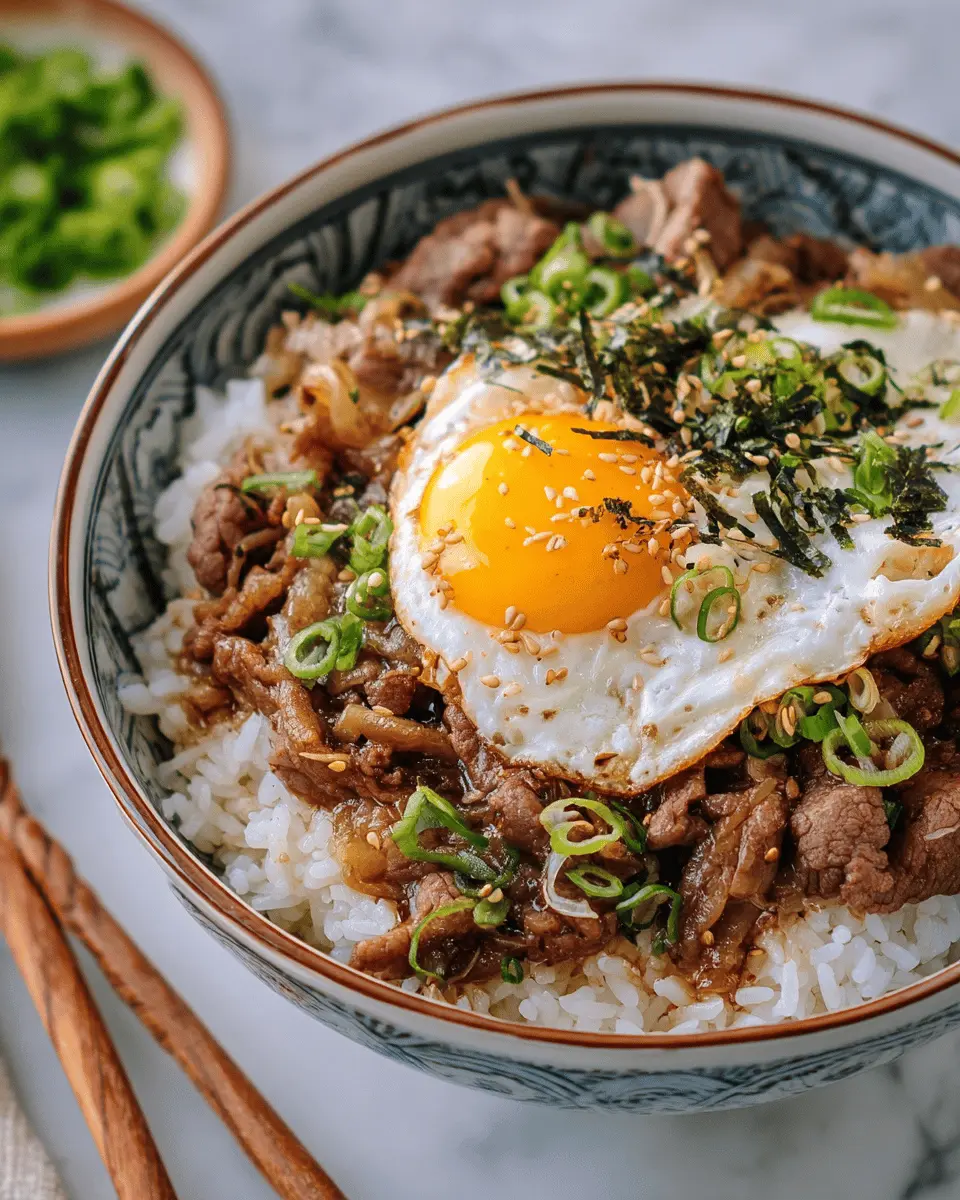
Variations on Gyudon Japanese Beef Rice Bowls
Spicy Gyudon with Chili Flakes
If you love a kick in your meal, try adding chili flakes to your gyudon Japanese beef rice bowls. Simply sprinkle some into the skillet while the beef is cooking. This little addition transforms the dish, giving it a delightful heat that complements the savory flavors. You can adjust the spice level to your preference; a little goes a long way!
Vegetarian Gyudon Alternative
Not in the mood for beef? You can create a delicious vegetarian gyudon by substituting the beef with thinly sliced mushrooms or tofu. Both options absorb the savory dashi stock, mirin, and soy sauce beautifully, making sure you won't miss the meat. This variation not only caters to vegetarians but can be a refreshing choice for anyone looking to lighten up their meal. Give it a try, and you might just find a new favorite!
Cooking Tips and Notes for Gyudon Japanese Beef Rice Bowls
Choosing the right cut of beef
When preparing gyudon Japanese beef rice bowls, selecting the right cut of beef makes all the difference. Opt for well-marbled cuts like fatty beef chuck or ribeye. These cuts not only tenderize beautifully when cooked but also add rich flavor, enhancing your dish.
Maintaining the right cooking temperature
To achieve that perfect smoky sweetness, cook your onions over medium-high heat until nicely caramelized—about 10 minutes. Then, add the beef and be mindful not to overcrowd the pan; this keeps the temperature consistent and allows for that perfect sear. Cook until just slightly browned before adding your mirin and soy sauce. Rest assured, maintaining the right cooking temperature will elevate your gyudon to restaurant-worthy status!
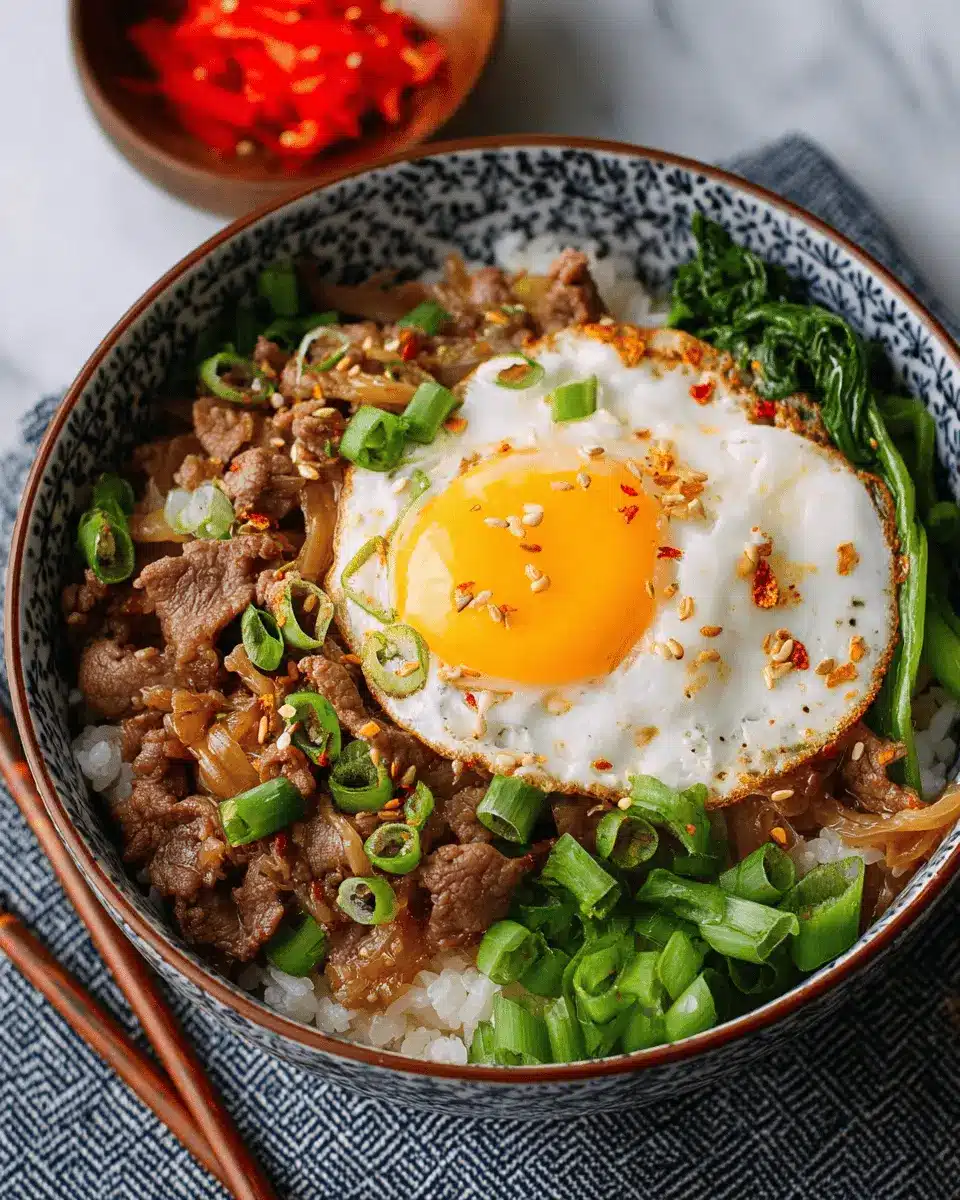
Serving Suggestions for Gyudon Japanese Beef Rice Bowls
Pairing Gyudon with Side Dishes
To elevate your gyudon Japanese beef rice bowls, consider complementing them with some delightful side dishes. A classic option is *miso soup, which adds warmth and umami to your meal. A simple salad with a sesame dressing or pickled vegetables can introduce a fresh crunch, balancing the richness of the beef. If you’re feeling adventurous, why not whip up *takoyaki or *gyoza? These popular Japanese appetizers can create a stunning spread for a casual gathering or dinner.
Creative Serving Ideas
Get creative with your presentation! Serve your gyudon on individual bowls garnished with finely chopped green onions or a sprinkle of shichimi togarashi for a hint of spice. For a fun twist, layer the beef and onions over crispy rice cakes instead of soft rice. Alternatively, wrap the beef filling in lettuce leaves for a healthy, low-carb option. These ideas not only make the meal more appealing but also encourage everyone to dig in! Explore more serving suggestions and pairings at sites like Just One Cookbook.
Time Breakdown for Gyudon Japanese Beef Rice Bowls
Preparation time
Get ready to cook! You'll need about 15 minutes to slice your onions and beef and gather everything. It's a quick and satisfying process.
Cooking time
Once you're all set, it’ll take about 25 minutes to bring the dish together. That includes simmering everything to meld those delicious flavors.
Total time
In just 40 minutes, you’ll have a steaming bowl of gyudon ready to enjoy! Perfect for a cozy weeknight dinner or impressing friends at your next gathering.
This overview ensures you're not left wandering in the kitchen—everything's ready in no time, allowing you to savor your gyudon Japanese beef rice bowls without stress! For more tips on preparing and serving this dish, check out this guide to Japanese rice.
Nutritional Facts for Gyudon Japanese Beef Rice Bowls
When enjoying gyudon Japanese beef rice bowls, understanding the nutritional aspects can enhance your cooking experience. Here's a quick breakdown to guide you:
Calories
Each serving of gyudon packs in approximately 598 calories, making it a hearty meal that’s perfect for satisfying hunger without feeling too heavy.
Protein Content
With around 36g of protein per serving, these flavorful rice bowls are a great source of this essential nutrient. This high protein content supports muscle health and can keep you feeling fuller longer.
Sodium Levels
On the downside, gyudon contains about 888mg of sodium. While it enhances flavor, be mindful of your overall sodium intake, especially if you're watching your levels. Consider using low-sodium soy sauce to modify your dish without sacrificing taste.
For more nutritional insights, check Healthline for valuable resources on dietary guidelines and nutrient breakdowns!
FAQs about Gyudon Japanese Beef Rice Bowls
Can I make gyudon in advance?
Absolutely! Gyudon Japanese beef rice bowls are perfect for meal prep. You can prepare the beef and sauce in advance and store them in the refrigerator for up to three days. Just reheat when you’re ready to enjoy. Cook your rice fresh to keep that fluffy texture, and follow with your favorite toppings like green onions or a soft-boiled egg for the best experience.
What can I substitute for dashi stock?
If you don't have dashi stock on hand, fear not! You can easily use beef or chicken stock as a substitute. If you're looking for a vegetarian option, consider vegetable broth seasoned with a bit of soy sauce or miso for an umami kick. Still, dashi brings a unique depth to your gyudon that’s hard to replicate.
How can I make my gyudon healthier?
To make your gyudon healthier, consider using leaner cuts of beef, like sirloin, and reduce the sugar content. You can also incorporate vegetables such as bok choy or spinach into the dish for added nutrients. Serving your gyudon with brown rice instead of white can enhance its fiber content, making it a more balanced meal.
Conclusion on Gyudon Japanese Beef Rice Bowls
In conclusion, gyudon Japanese beef rice bowls are a delicious and comforting dish that’s perfect for any day of the week. With tender beef, savory onions, and a rich sauce, they capture the essence of home-cooked Japanese cuisine. Try this recipe for a simple yet satisfying meal that everyone will love!

Gyudon (Japanese Beef & Rice Bowls)
Equipment
- large skillet
Ingredients
- 2 tablespoons neutral oil such as vegetable or canola oil
- 2 medium onions very thinly sliced
- 1 pound very thinly sliced beef fatty beef chuck or ribeye
- 2 teaspoons sugar
- 2 tablespoons mirin
- 2 tablespoons soy sauce
- 1 cup dashi stock can also substitute beef or chicken stock
Instructions
- Heat the neutral oil in a large skillet over medium high heat, and cook the sliced onions for about 10 minutes, stirring often.
- Add the beef and sugar, and cook until the beef is slightly browned. Add the mirin, soy sauce, and stock. Bring to a simmer, and cook for about 10-15 minutes to reduce the stock into a thin sauce. Taste for seasoning, and add a little more soy sauce if needed.




Leave a Reply